


 Licensed
 All Dubai
 Plumbing Engineering & Maintenance
The Impact of Temperature in Pipes: Key Risks
 Alex Morgan
 Sep 27, 2026
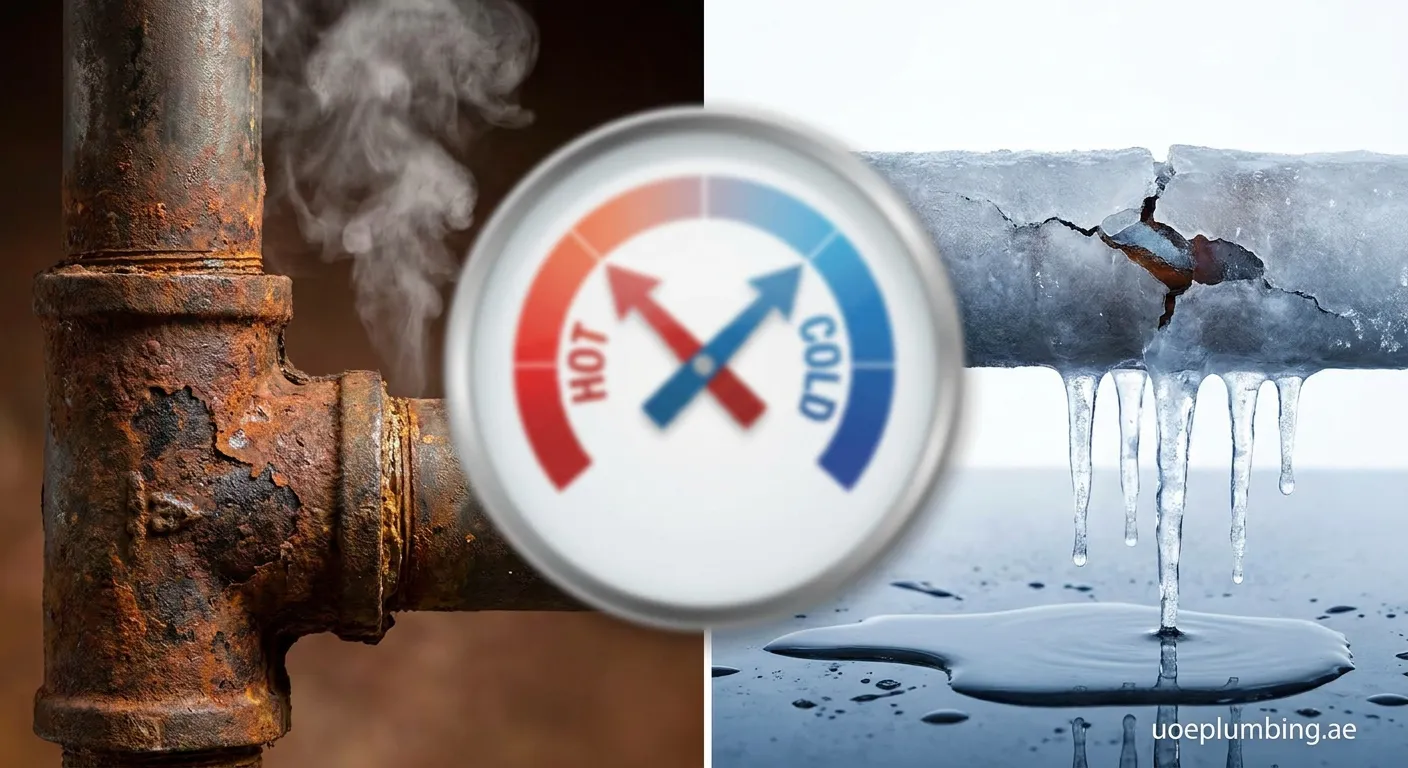
Fluctuating climate and water heat heavily affect plumbing durability. Learn how thermal stress harms water lines and how to prevent costly pipe damage at home.
Understanding Thermal Effects on Modern Plumbing
Temperature fluctuations represent one of the most critical yet frequently overlooked threats to residential and commercial piping networks. When fluid temperatures rise or ambient weather changes drastically, the impact of temperature in pipes becomes evident through physical structural shifts. Water lines continuously expand when exposed to heat and contract as temperatures drop, creating persistent mechanical stress along joints, valves, and wall anchors.
The Physics of Thermal Expansion and Contraction
Every plumbing material reacts distinctly to thermal shifts. Metallic systems like copper and galvanized steel possess defined expansion coefficients, whereas polymers such as PVC, CPVC, and PEX exhibit substantially greater dimensional changes. When hot water rushes through cold lines, rapid thermal expansion exerts intense pressure against rigid fittings. Without proper accommodation, this repeated cycle leads to material fatigue, hairline fractures, and premature joint failure.
Major Consequences of Extreme Temperatures
Understanding how heat and cold compromise plumbing integrity enables timely preventative action before catastrophic failures occur:
- Joint and Fitting Separation: Continuous expansion forces push pipes outward against elbows and couplings, weakening solder bonds and threaded connections over time.
- Pipe Bursting and Ruptures: Extreme freezing causes water to expand within confined walls, while severe overheating degrades plastic pipe structural integrity, resulting in sudden bursts.
- Increased Water Hammer: High water temperatures increase internal kinetic energy, amplifying hydraulic shock waves when valves snap shut.
- Corrosion Acceleration: Elevated thermal levels accelerate electrochemical reactions in metal pipes, hastening internal rusting and pinhole leak formation.
"Thermal stress is a silent plumbing hazard. Unchecked thermal cycles can compromise even premium piping materials within a few operating seasons."
How Material Choices Dictate Pipe Resilience
Selecting appropriate plumbing materials mitigates thermal vulnerability across the entire installation:
- Copper Pipes: Highly tolerant of high operating temperatures, yet vulnerable to rapid heat loss and freezing ruptures if uninsulated.
- PEX (Cross-linked Polyethylene): Highly flexible and resistant to freeze-breakage, though susceptible to expansion sagging under continuous high heat.
- PVC and CPVC: Cost-effective and chemically resilient, but rigid CPVC can turn brittle under severe thermal cycles.
Effective Strategies for Thermal Pipe Protection
Mitigating the impact of temperature in pipes requires engineered solutions and regular maintenance. Installing expansion loops or specialized expansion joints absorbs dimensional shifts naturally. Applying thermal insulation sleeves stabilizes pipe surface temperatures, preventing condensation, freezing, and excess heat loss. Furthermore, installing pressure relief valves and expansion tanks on water heaters relieves excess hydraulic pressure generated during thermal heating cycles. Proactive inspections detect minor misalignments and micro-leaks before expensive structural flooding occurs.
Protect Your Home's Piping Today
Understanding the impact of temperature in pipes helps prevent sudden breakdowns. If you suspect hidden leaks or line stress, our experts provide prompt Pipe-repair Al Warqa 4 to restore safety to your system.
 plumbing tips, pipe maintenance, thermal expansion, pipe repair
